

Banana Flour Market Set to Reach USD 2.41 Billion by 2035 on Gluten-Free and Clean-Label Demand
Banana flour market
Discover the growing banana flour market, driven by gluten-free demand, clean-label trends, and rising use in nutrition and food innovation.
"Growing demand for gluten-free, clean-label, and functional ingredients is expected to position banana flour as an increasingly important component of next-generation food formulations."
”
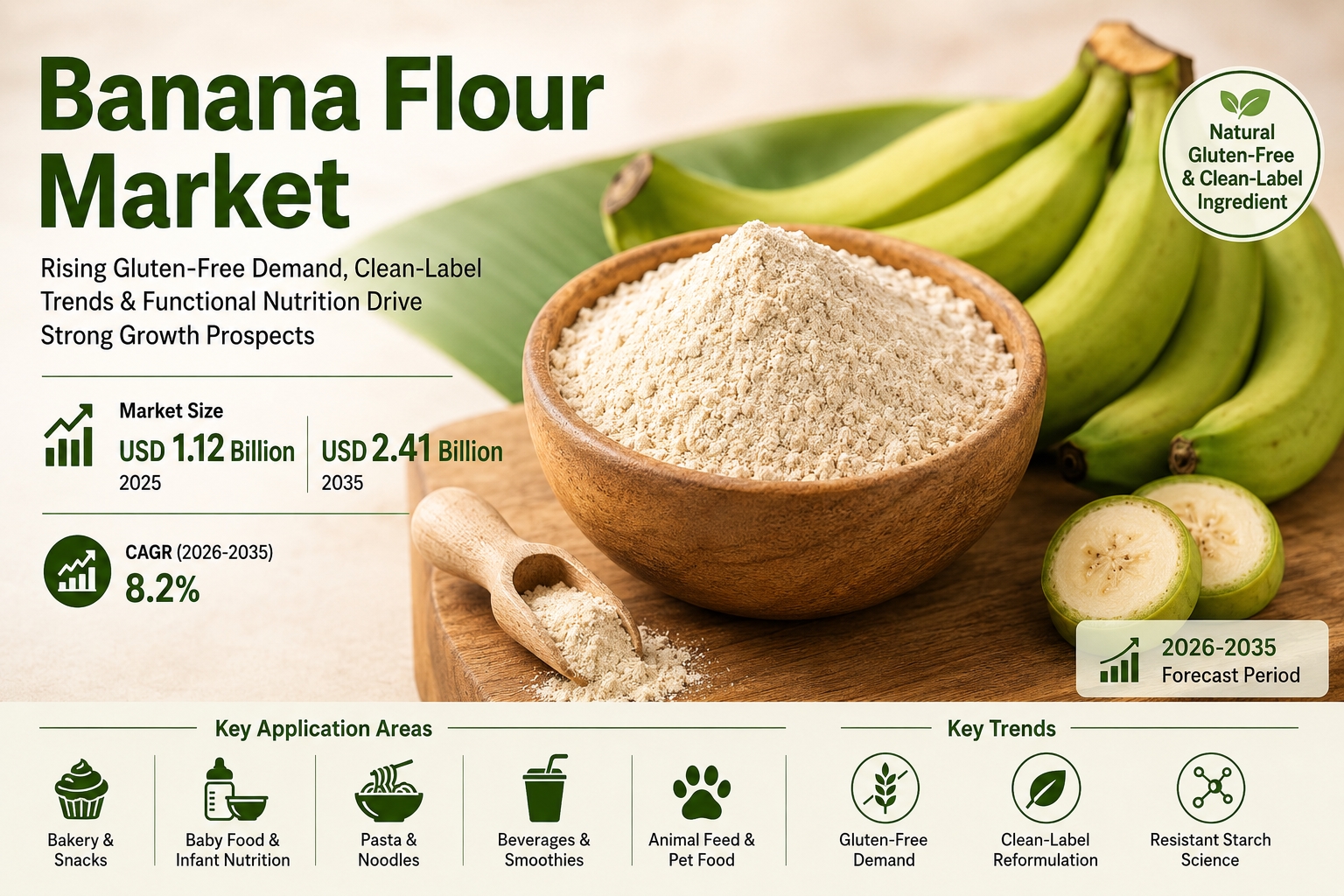
NEW YORK, NY, UNITED STATES, July 9, 2026 /EINPresswire.com/ -- The global banana flour market is gaining strong commercial momentum as food manufacturers, nutrition brands, and ingredient suppliers respond to rising demand for gluten-free, clean-label, and functional food ingredients. According to Market Research Future’s latest market assessment, the banana flour market is valued at USD 1.12 billion in 2025 and is projected to expand to USD 2.41 billion by 2035, registering a compound annual growth rate of 8.2% during the forecast period from 2026 to 2035.— Market Research Future (MRFR)
This growth outlook reflects a broader transformation in consumer preferences, where health-conscious shoppers are increasingly seeking ingredients that support digestive wellness, allergen-friendly formulations, and improved nutritional profiles. Banana flour has emerged as a compelling ingredient because it offers versatility across bakery, infant nutrition, beverages, snacks, pasta, noodles, animal feed, and pet food applications. Its rising popularity is also supported by growing awareness of resistant starch as a valuable dietary component, particularly in products positioned around gut health, satiety, and blood sugar management.
As manufacturers continue reformulating products to meet evolving consumer expectations, banana flour is moving from niche adoption toward mainstream ingredient use. Its appeal lies not only in its functional benefits, but also in its alignment with the clean-label movement, where consumers increasingly prefer recognizable, minimally processed ingredients. With global demand for premium natural ingredients accelerating, banana flour is expected to remain one of the more attractive botanical flour categories through 2035.
Key Growth Drivers
Market expansion is being supported by several demand-side factors that are reshaping the food and nutrition landscape. One of the most important is the continued rise in gluten-free consumption worldwide. This trend is driven both by the prevalence of celiac disease and by broader lifestyle preferences among consumers who seek alternatives to conventional wheat-based products. Banana flour fits naturally into this space because it can be used in formulations designed to reduce allergen exposure while preserving texture, taste, and usability. This makes it highly relevant to food brands that want to expand their gluten-free portfolios without compromising product performance.
Another major growth driver is the increased focus on clean-label reformulation. Food and beverage companies are under pressure to remove synthetic additives, shorten ingredient lists, and provide greater transparency to consumers. Banana flour supports this objective by offering a plant-based, recognizable ingredient that can contribute to the structure and nutritional density of final products. As a result, it is increasingly considered a strategic ingredient by companies seeking to modernize formulations while strengthening brand trust.
Resistant starch science is also shaping product development in the banana flour market. Green banana flour, in particular, has attracted attention for its naturally higher resistant starch content, making it especially relevant for nutrition products that emphasize digestive support and slower carbohydrate release. This has opened opportunities in functional foods, better-for-you snacks, and wellness-oriented meal solutions. As scientific interest in resistant starch continues to grow, banana flour is likely to benefit from increased product experimentation and wider commercial adoption.
Get Full PDF Sample Copy of Report: (Including Full TOC, List of Tables & Figures, Chart) @ https://www.marketresearchfuture.com/sample_request/6646
Product Type Outlook
The market is segmented by product type, application, and distribution channel, with each segment contributing differently to future growth. By product type, green banana flour is expected to remain highly attractive because of its functional starch profile and suitability for health-focused formulations. Its appeal is particularly strong in products designed around digestive wellness, glycemic support, and fiber-rich nutrition.
Ripe banana flour, by contrast, offers a naturally sweeter flavor and is useful in bakery and snack applications where taste and aroma are key. This makes it a practical ingredient for manufacturers seeking to balance nutritional value with consumer-friendly sensory characteristics. Organic banana flour is also gaining visibility, particularly among premium brands and consumers who prioritize sustainable and certified ingredient sourcing. As demand for organic and minimally processed foods continues to rise, this segment is expected to gain additional traction in both retail and industrial channels.
Application Opportunities
By application, bakery and snacks represent a major opportunity area due to the growing need for alternative flours that can support gluten-free cookies, breads, crackers, and snack bars. Banana flour can help manufacturers create products that meet consumer expectations for taste, texture, and nutritional value while also supporting clean-label positioning. Its ability to function in both sweet and savory formulations adds to its commercial appeal.
Banana flour also has a meaningful role in baby food and infant nutrition, where gentle digestion, ingredient purity, and nutritional quality are central concerns. In this category, food manufacturers are evaluating banana flour for formulations that are easy to digest, naturally derived, and compatible with growing demand for minimally processed nutrition products. Parents are increasingly attentive to ingredient quality, and banana flour’s natural origin and functional characteristics make it an appealing option for formulation teams seeking differentiation in a crowded shelf environment.
In pasta and noodles, banana flour provides formulators with an option to diversify texture and nutrition in gluten-free or reduced-grain products. Beverage and smoothie applications are also expanding as consumers seek nutrient-rich powders that can be blended into everyday routines. Banana flour’s compatibility with powdered nutrition formats makes it suitable for modern wellness products that emphasize convenience and functionality.
In addition, animal feed and pet food represent a promising niche, especially as manufacturers search for plant-derived ingredients that can support product differentiation. As pet owners increasingly look for natural and functional ingredients in companion animal nutrition, banana flour may find a growing role in premium formulations that emphasize digestibility and ingredient transparency.
Distribution Channel Trends
Distribution channel dynamics are evolving as consumer purchasing habits continue to shift. Supermarkets and hypermarkets remain important for reaching mainstream shoppers, particularly in markets where packaged food ingredients are increasingly available through large retail formats. These channels continue to play a central role in building consumer awareness and supporting broad market access.
At the same time, online and e-commerce channels are gaining strong traction as consumers become more comfortable purchasing specialty food ingredients digitally. This trend is especially important for banana flour, which often appeals to health-conscious buyers, home bakers, and consumers seeking niche or functional ingredients that may not always be widely stocked in traditional retail outlets.
Specialty health stores continue to play an influential role in educating consumers and serving premium or targeted wellness categories. These outlets are particularly important for products positioned around gluten-free, organic, and functional nutrition claims. Food service and industrial channels are equally significant, particularly for manufacturers and operators that use banana flour as a functional ingredient in larger-scale production. Together, these channels create a diversified route to market that supports both consumer and business demand.
Infant and Pediatric Nutrition Potential
The global banana flour market is also being shaped by the opportunity to expand into infant and pediatric nutrition. In this category, banana flour is being evaluated for formulations that are easy to digest, naturally derived, and compatible with growing demand for minimally processed nutrition products. Its mild flavor profile and functional properties make it suitable for products designed for young children and infants, where ingredient quality and digestibility are especially important.
This opportunity is particularly relevant as parents continue to seek products that combine convenience, safety, and nutritional value. Banana flour can support product developers looking to create differentiated offerings in a category where trust and formulation quality are critical. As awareness of clean-label infant nutrition grows, banana flour may become an increasingly attractive ingredient for brands seeking to strengthen their position in this segment.
Functional and Sports Nutrition Growth
Functional and sports nutrition formulations represent another important growth avenue. As consumers pay closer attention to carbohydrate quality, gut health, and satiety, ingredients with resistant starch and natural nutritional value are receiving increased attention. Banana flour can be used in powders, bars, baked products, and blended nutrition products that target active consumers or those following wellness-centered diets.
This creates a strong value proposition for brands that want to combine convenience with functional benefits. Banana flour’s ability to support energy-focused and digestive-health-oriented formulations makes it relevant to a wide range of product concepts, from meal replacements to performance snacks. As the functional nutrition category continues to expand, banana flour is likely to gain additional visibility among formulators seeking plant-based, versatile, and consumer-friendly ingredients.
Emerging-Market Supply Chain Opportunities
Emerging-market smallholder integration may also become an important strategic theme over the forecast horizon. Banana flour production can create value from surplus or underutilized bananas, opening possibilities for agricultural supply chain development and local processing. In regions where bananas are abundantly cultivated, this may support income diversification for smallholders while helping processors source raw materials more efficiently.
Such supply chain models could strengthen resilience, improve sustainability narratives, and support broader market penetration. They also create opportunities for local value addition, which can benefit both producers and processors. As companies increasingly look for responsible sourcing models and more resilient ingredient supply chains, banana flour production may become an important example of how agricultural byproducts and surplus crops can be transformed into commercially valuable ingredients.
Competitive Landscape
From a competitive perspective, the market includes a mixture of established ingredient suppliers and specialized nutrition companies. Key players include International Agriculture Group, NuNaturals / Livestrong Foods, Saipro Biotech, Zuvii, NAITAS Ltd, and ADM. These companies are positioned across different parts of the value chain, from ingredient sourcing and processing to branded consumer products and industrial supply.
Competition is expected to intensify as companies invest in product innovation, sourcing efficiency, and clean-label positioning. The market’s growth potential is likely to attract additional interest from ingredient manufacturers and food brands seeking to capitalize on the rising demand for functional plant-based flours. Companies that can combine technical expertise with reliable sourcing and strong market positioning may be best placed to capture share in this expanding category.
Strategic Priorities for Market Participants
The competitive landscape is likely to be influenced by several strategic priorities. Product quality and consistency remain essential, especially for applications such as bakery, infant nutrition, and beverage formulations where performance can affect consumer acceptance. Supply chain reliability is another priority, given the agricultural nature of banana raw material sourcing. Brands that can secure stable upstream relationships and build traceability into their ingredient story may gain an advantage with manufacturers and retailers alike.
At the same time, companies that invest in education around banana flour’s nutritional and functional benefits may be better positioned to accelerate adoption among both business buyers and end consumers. Since banana flour is still developing broader mainstream recognition in many markets, clear communication around its benefits, applications, and formulation advantages will be important for long-term category growth.
Innovation and Product Development
Innovation will remain central to market development. Food manufacturers are expected to continue experimenting with banana flour in blended flour systems, fortified products, and hybrid formulations that combine functionality with sensory appeal. Since banana flour can behave differently depending on ripeness, processing method, and particle size, formulation expertise will be important for delivering reliable product performance.
This creates opportunities for ingredient suppliers that can offer technical support, application guidance, and tailored product grades for different industries. Companies that help customers solve formulation challenges while delivering consistent quality may be able to build stronger long-term relationships across bakery, nutrition, beverage, and industrial applications. As product developers seek to balance health claims with consumer acceptance, banana flour’s versatility will remain one of its strongest commercial advantages.
Sustainability and Circular Economy Benefits
Sustainability is another factor that may influence future demand. Banana flour can contribute to waste reduction when made from bananas that are surplus, cosmetically imperfect, or otherwise unsuitable for fresh retail sale. In a food system increasingly focused on circularity and resource efficiency, this narrative can strengthen brand value and consumer appeal.
Companies that communicate responsible sourcing and production practices may find stronger resonance among buyers looking for environmentally conscious ingredient choices. This is especially relevant as sustainability becomes a more important purchasing criterion across both retail and industrial food markets. Banana flour’s ability to support waste reduction and value creation from underutilized crops gives it a meaningful role in broader sustainability strategies.
Regional Outlook and Market Expansion
Regional adoption is expected to vary, but the market’s underlying drivers are broadly global. In mature markets, demand is being led by gluten-free and wellness-oriented consumers who are willing to pay a premium for functional ingredients. In emerging markets, growth is tied more closely to industrial uses, local nutrition needs, and expanding access to packaged foods.
Across both contexts, banana flour’s flexibility makes it suitable for a wide range of formulations, which should help support long-term market expansion. As awareness grows and product availability improves, the ingredient is likely to gain traction in both consumer-facing and business-to-business channels. This broad applicability gives the market a strong foundation for sustained growth through 2035.
Outlook to 2035
Looking ahead, the banana flour market is expected to benefit from the convergence of three major trends: consumer preference for gluten-free and clean-label foods, rising scientific interest in resistant starch and digestive health, and the continued search for innovative plant-based ingredients that can meet diverse formulation needs. Together, these factors are creating an environment in which banana flour can move beyond specialty use and become a more established ingredient in both consumer and industrial food systems.
As the market advances toward 2035, manufacturers, ingredient suppliers, and food innovators are likely to focus on product differentiation, application versatility, and supply chain resilience. Companies that can combine these strengths with strong technical support and credible nutrition positioning may be best placed to capture value in this growing category.
For brands, processors, and investors monitoring the future of plant-based functional ingredients, the banana flour market presents a compelling opportunity. With steady growth projected over the next decade, the category stands out as a practical intersection of nutrition, sustainability, and product innovation.
Discover Related Research Reports By Market Research Future:
Cassava Flour Market
https://www.marketresearchfuture.com/reports/cassava-flour-market-32042
Non GMO Flour Market
https://www.marketresearchfuture.com/reports/non-gmo-flour-market-35609
Premix Bread Flour Market
https://www.marketresearchfuture.com/reports/premix-bread-flour-market-37708
Sagar Kadam
Market Research Future
+1 628-258-0071
email us here
Legal Disclaimer:
EIN Presswire provides this news content "as is" without warranty of any kind. We do not accept any responsibility or liability for the accuracy, content, images, videos, licenses, completeness, legality, or reliability of the information contained in this article. If you have any complaints or copyright issues related to this article, kindly contact the author above.
