

Edible Films and Coatings Market Set for Strong Growth as Sustainable Packaging Demand Accelerates
edible films and coatings market
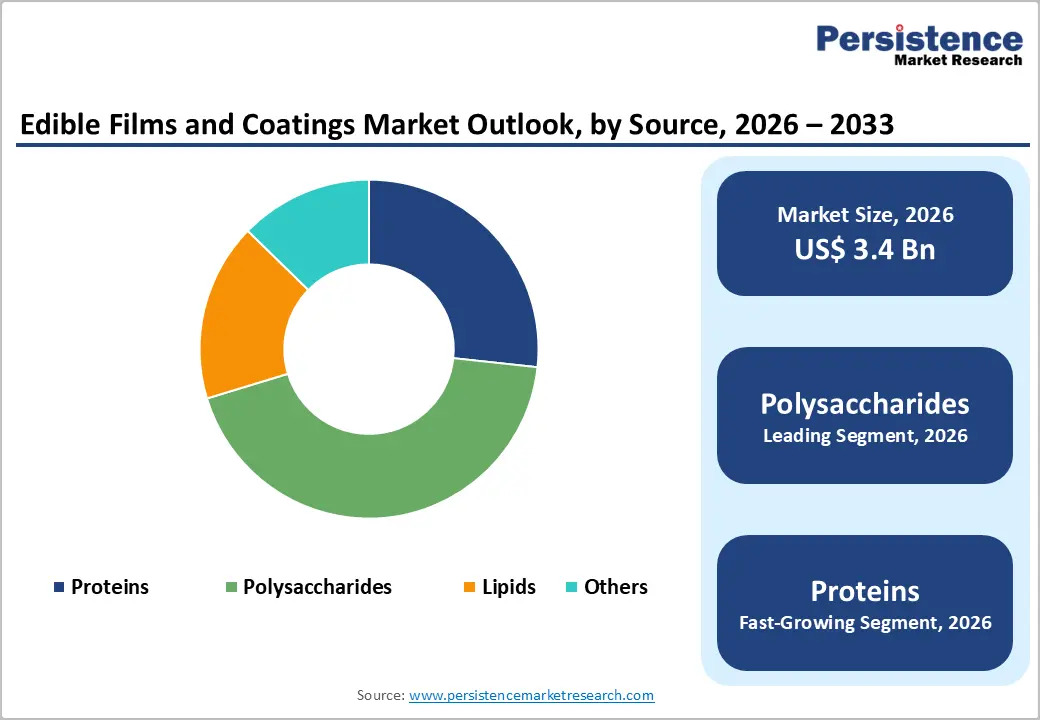
Edible Films and Coatings Market to grow from US$3.4Bn (2026) to US$5.8Bn (2033) at 7.8% CAGR, driven by sustainable packaging demand.
LONDON, UNITED KINGDOM, June 30, 2026 /EINPresswire.com/ -- The global edible films and coatings market is expected to witness steady expansion over the coming years as food manufacturers increasingly adopt sustainable packaging solutions and shelf-life extension technologies. The market is projected to grow from US$3.4 billion in 2026 to US$5.8 billion by 2033, registering a compound annual growth rate (CAGR) of 7.8% during the forecast period. Growing consumer preference for clean-label products, biodegradable packaging, and minimally processed foods continues to strengthen market demand across multiple food categories.
Download Your Free Sample & Explore Key Insights: https://www.persistencemarketresearch.com/samples/29161
Market Overview
Edible films and coatings are thin protective layers made from natural materials that can be applied directly to food products. These coatings help reduce moisture loss, limit microbial growth, and preserve freshness while minimizing the use of conventional plastic packaging. Rising concerns over environmental sustainability and food waste are encouraging manufacturers to invest in innovative edible packaging technologies.
The market has demonstrated consistent progress, supported by a historical CAGR of 7.0% between 2020 and 2025. Increasing investments in research and development, along with technological advancements in biodegradable materials, are expected to create additional growth opportunities throughout the forecast period.
Key Growth Drivers
The primary factor driving market expansion is the increasing demand for sustainable and biodegradable packaging solutions. Conventional plastic packaging continues to face criticism because of its long decomposition period and environmental impact. Governments, regulatory authorities, and food manufacturers are therefore promoting eco-friendly alternatives that reduce plastic consumption without compromising food quality.
Another important growth driver is the rising need to reduce global food waste. Edible coatings help extend the shelf life of fruits, vegetables, meat, and processed foods by controlling moisture transfer and slowing microbial activity. This supports longer storage and transportation periods while maintaining product quality. Growing consumption of fresh produce and ready-to-eat food products further boosts demand for advanced edible coating technologies.
Market Challenges
Despite strong growth prospects, the industry faces several technical and commercial challenges. Many biodegradable edible films still lack the moisture resistance and mechanical strength offered by traditional plastic packaging. Polysaccharide- and protein-based coatings perform well as gas barriers but often provide limited protection against water vapor, restricting their use in certain food applications.
Manufacturers must also comply with stringent food safety regulations across different countries. Production costs, raw material sourcing, and environmental assessments further increase commercialization challenges, slowing large-scale adoption despite growing consumer demand for sustainable packaging.
Get Custom Insights Designed for Your Businecss: https://www.persistencemarketresearch.com/request-customization/29161
Emerging Opportunities
Innovation in composite and multifunctional edible films is expected to create significant market opportunities. By combining proteins, polysaccharides, and lipids, manufacturers can improve strength, flexibility, moisture resistance, and gas barrier performance. These advanced films can also incorporate antimicrobial and antioxidant ingredients that enhance food safety and extend shelf life.
Researchers are increasingly exploring agricultural by-products such as fruit peels and plant waste as raw materials for edible films. This supports circular economy initiatives while reducing industrial waste and lowering production costs, making edible coatings more sustainable and commercially attractive.
Material and Application Insights
Polysaccharide-based films accounted for the largest market share of 43.6% in 2025. Their widespread adoption is attributed to strong film-forming capability, affordability, non-toxicity, and excellent oxygen barrier performance. Materials such as starch, cellulose, and pectin remain widely used across fruits, vegetables, and processed food applications.
Among applications, fruits and vegetables represent the leading segment due to their high perishability and significant post-harvest losses. Edible coatings effectively reduce moisture loss, slow respiration rates, and inhibit microbial growth, helping maintain freshness throughout storage and transportation. Rising global trade in fresh produce continues to strengthen demand for these preservation technologies.
Regional Analysis
North America remained the leading regional market in 2025, accounting for 38.3% of global revenue. The region benefits from advanced food processing infrastructure, widespread adoption of sustainable packaging technologies, and strong demand for packaged and ready-to-eat foods. Continued investments in food innovation and well-developed cold chain systems further reinforce market leadership.
Europe also represents an important market, supported by strict sustainability regulations, food waste reduction initiatives, and policies encouraging biodegradable packaging materials. Strong consumer awareness regarding environmental responsibility continues to encourage adoption across the region.
Asia-Pacific is projected to register the fastest growth during the forecast period. Expanding food production, rapid urbanization, improving retail infrastructure, and increasing consumption of fresh and packaged foods are driving regional demand. Government initiatives aimed at reducing food waste and improving food supply chains are expected to further accelerate market expansion.
Checkout Now & Download Complete Market Report: https://www.persistencemarketresearch.com/checkout/29161
Market Segmentation
By Material Type
Proteins
Polysaccharides
Lipids
Others
By Application
Dairy products
Bakery and Confectionery
Fruits and Vegetables
Meat, Poultry, and Seafood
Others
By Function Type
Barrier Properties
Active Packaging
Structural and Mechanical Properties
Biodegradable Packaging Functionality
Others
By Region
North America
Europe
East Asia
South Asia & Oceania
Latin America
Middle East and Africa
Competitive Landscape
The edible films and coatings market remains highly competitive as companies focus on product innovation, production expansion, regulatory compliance, and strategic partnerships. Recent developments include Akorn Technology's recognition in the UAE FoodTech Challenge for its edible coating technology designed to extend fresh produce shelf life. In 2024, Tate & Lyle strengthened its market presence by acquiring BioFilm Limited to expand edible film applications across nutraceutical and medical sectors. Major industry participants include Tate & Lyle PLC, Ingredion, Cargill Incorporated, Apeel Sciences, Kerry Group plc., Mantrose-Haeuser Co., Inc., NatureSeal, MonoSol LLC, Lactips, Hazel Technologies, Pace International LLC, Sufresca, Flo Enterprises, and several other regional manufacturers actively investing in sustainable packaging innovation.
Read Related Reports:
Cranberry Supplements Market: The cranberry supplements market is projected to grow from US$ 311.1 million in 2026 to US$ 443.6 million by 2033, expanding at a CAGR of 5.2%.
Oryzanol Market: Global oryzanol market to grow from US$2.2 Bn in 2026 to US$3.6 Bn by 2033, registering a CAGR of 5.4% during the forecast period.
Persistence Market Research
Persistence Market Research Pvt Ltd
+1 646-878-6329
email us here
Visit us on social media:
LinkedIn
Instagram
Facebook
YouTube
X
Legal Disclaimer:
EIN Presswire provides this news content "as is" without warranty of any kind. We do not accept any responsibility or liability for the accuracy, content, images, videos, licenses, completeness, legality, or reliability of the information contained in this article. If you have any complaints or copyright issues related to this article, kindly contact the author above.
