

Seed Treatment Market to Reach USD 13,464 Million by 2031 at 8.1% CAGR | Driven by Sustainable Agriculture Trends
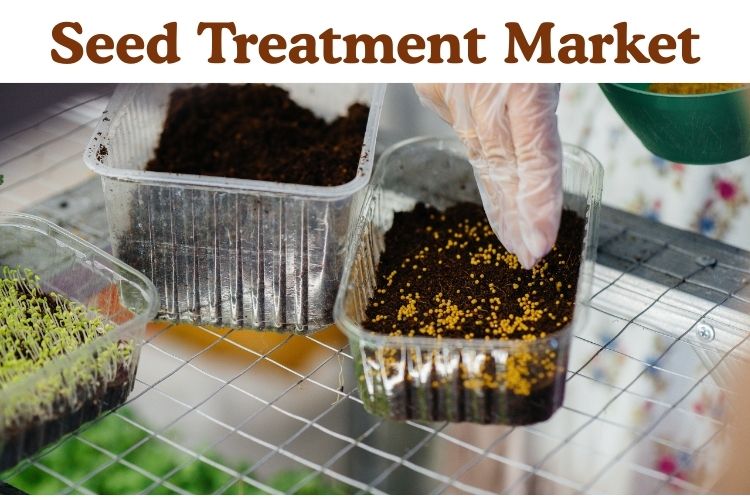
Seed Treatment Market
Seed Treatment Market to reach USD 13,464M by 2031 at 8.1% CAGR. Growth driven by hybrid seeds, biological treatments & North America demand.
Seed treatment is transforming modern agriculture, combining crop protection, sustainability, and innovation to boost global food production while reducing environmental impact”
AUSTIN, TX, UNITED STATES, February 19, 2026 /EINPresswire.com/ -- According to DataM Intelligence, the Seed Treatment Market reached USD 7,247 million in 2024 and is projected to witness lucrative growth by reaching USD 13,464 million by 2031. The market is growing at a CAGR of 8.1% during the forecast period (2024–2031). This strong expansion is driven by rising demand for high-yield crop varieties, increasing adoption of hybrid and genetically modified seeds, and growing awareness of integrated pest management practices. Among segments, chemical seed treatments currently dominate due to their established effectiveness, while North America leads the global market owing to advanced farming practices, high adoption of treated seeds, and strong presence of major agrochemical manufacturers.— DataM Intelligence
The Seed Treatment Market has evolved into a critical component of modern agriculture, offering farmers a proactive approach to crop protection and yield optimization. Seed treatment involves the application of chemical or biological agents directly to seeds before planting to protect them from soil-borne pathogens, insects, and adverse environmental conditions. This early-stage protection ensures improved germination, enhanced seedling vigor, and uniform crop establishment. As global agriculture increasingly focuses on sustainable intensification, seed treatment technologies are playing a vital role in reducing crop losses while optimizing input costs.
The increasing global population, projected to exceed 9 billion by 2050, is intensifying pressure on the agricultural sector to improve productivity per hectare. Seed treatment offers a cost-effective and sustainable approach to crop protection, reducing the need for multiple pesticide sprays and lowering input costs for farmers. Technological advancements in biological seed treatment, microbial inoculants, and precision coating technologies are further transforming the competitive landscape. The integration of digital agriculture and data-driven crop management is also supporting the expansion of the seed treatment industry across both developed and emerging markets.
Get a Exclusive Sample PDF Of This Report (Get Higher Priority for Corporate Email ID):- https://www.datamintelligence.com/download-sample/seed-treatment-market
Key Highlights from the Report:
➤ The Seed Treatment Market is projected to witness steady growth driven by increasing adoption of hybrid and genetically modified seeds.
➤ Chemical seed treatments dominate the market due to proven efficacy against fungal and insect infestations.
➤ Biological seed treatment is the fastest-growing segment, supported by sustainable agriculture trends.
➤ North America holds the leading market share owing to advanced farming technologies and regulatory frameworks.
➤ Rising concerns over soil health and environmental sustainability are accelerating demand for eco-friendly seed solutions.
➤ Strategic collaborations between agrochemical companies and seed manufacturers are reshaping competitive dynamics.
Recent Developments:
October 2025: BASF SE introduced a next-generation biological seed treatment platform designed to enhance early crop vigor and improve resistance against soil-borne pathogens. The solution integrates microbial inoculants with advanced coating technology, supporting sustainable agriculture and reducing reliance on synthetic chemicals.
September 2025: Syngenta Group launched an innovative fungicide-insecticide combination seed treatment aimed at protecting oilseeds and cereals during early growth stages. The product offers improved seedling establishment and aligns with increasing regulatory focus on environmentally responsible crop protection solutions.
August 2025: Corteva Agriscience expanded its seed treatment portfolio with a new bio-based formulation targeting nematode control in soybean and corn crops. The development supports regenerative agriculture practices and responds to rising demand for residue-free food production.
June 2025: UPL Limited introduced a polymer-based seed coating technology designed to enhance nutrient absorption efficiency and improve drought tolerance. The innovation strengthens crop resilience in climate-affected regions, particularly across Asia-Pacific and Latin America.
Mergers & Acquisitions:
November 2025: Bayer AG completed the acquisition of a specialty biological seed treatment startup to strengthen its sustainable crop protection portfolio and accelerate innovation in microbial seed enhancement technologies.
September 2025: FMC Corporation acquired a seed-applied technology developer specializing in precision coating and controlled-release formulations, expanding its high-performance seed treatment capabilities for cereals and pulses.
July 2025: Nufarm Limited finalized the acquisition of a regional seed treatment solutions provider to enhance its presence in emerging agricultural markets and broaden its portfolio of fungicide and insecticide seed treatments.
May 2025: Sumitomo Chemical acquired a digital agriculture analytics firm focused on seed performance monitoring, enabling data-driven optimization of treated seed performance and strengthening integrated crop management solutions.
Company Insights
The Seed Treatment Market is highly competitive, with major global agrochemical and biotechnology companies driving innovation and expansion. Key players include:
BASF SE
Bayer AG
Syngenta AG
Corteva, Inc.
Sumitomo Chemicals Co., Ltd
Solvay SA
Dow
Croda
Nufarm Limited
Crystal Crop Protection Ltd
Get Customization in the report as per your requirements: https://www.datamintelligence.com/customize/seed-treatment-market
Market Segmentation:
The Seed Treatment Market can be segmented based on product type, crop type, function, and application technique. By product type, the market is divided into chemical seed treatment and biological seed treatment. Chemical treatments, including fungicides, insecticides, and nematicides, remain the dominant segment due to their reliability and immediate protection against a broad range of pathogens. These treatments are widely used in large-scale commercial farming operations where yield protection is critical. However, biological seed treatment, which includes microbial inoculants and plant growth-promoting rhizobacteria (PGPR), is gaining momentum as farmers seek environmentally friendly alternatives to synthetic agrochemicals.
In terms of crop type, the market covers cereals and grains, oilseeds and pulses, fruits and vegetables, and others. Cereals and grains account for the largest market share, given their extensive global cultivation and high economic importance. Corn, wheat, and rice are particularly prominent in seed treatment applications due to their vulnerability to soil-borne diseases and pests. Oilseeds and pulses are also experiencing growing demand, especially in emerging markets where protein-rich crops are increasingly cultivated to meet dietary shifts.
Functionally, seed treatments are categorized into crop protection and seed enhancement. Crop protection dominates the segment, as preventing early-stage crop loss remains the primary objective for farmers. However, seed enhancement treatments, which improve germination rates, vigor, and stress tolerance, are gaining traction as climate variability intensifies.
Regional Insights:
North America leads the global Seed Treatment Market, supported by high mechanization levels, widespread adoption of genetically modified crops, and strong regulatory oversight. The United States, in particular, has a well-established seed industry and extensive use of treated seeds across major crops such as corn and soybean. Farmers in the region rely heavily on seed-applied fungicides and insecticides to mitigate risks associated with unpredictable weather patterns and pest outbreaks.
Europe represents another significant market, driven by stringent regulations aimed at reducing foliar pesticide usage and promoting integrated pest management (IPM) practices. While certain chemical treatments face regulatory scrutiny, this has opened opportunities for biological seed treatments and sustainable crop protection technologies. Countries such as Germany, France, and the UK are investing in research and innovation to align agricultural productivity with environmental compliance.
The Asia-Pacific region is expected to witness the fastest growth during the forecast period. Rapid population growth, expanding agricultural activities, and increasing awareness among farmers about yield optimization are major drivers. Countries like China and India are investing in modern agricultural inputs to improve crop output and food security. Latin America, particularly Brazil and Argentina, also presents strong growth potential due to large-scale soybean and corn cultivation.
Market Dynamics
Market Drivers
One of the primary drivers of the Seed Treatment Market is the growing need for enhanced agricultural productivity. As arable land per capita declines and food demand rises, farmers must maximize output from existing farmland. Seed treatment provides early-stage protection, ensuring uniform crop establishment and higher yields. Additionally, the rising prevalence of seed-borne and soil-borne diseases is encouraging farmers to adopt preventive measures at the seed level rather than relying solely on post-emergence chemical sprays.
Another significant driver is the shift toward sustainable agriculture practices. Governments and regulatory bodies are promoting reduced pesticide usage, and seed treatments offer a more targeted application method that minimizes environmental impact. The growing popularity of biological seed treatment solutions further supports this trend, aligning with consumer demand for residue-free and eco-friendly food production systems.
Market Restraints
Despite its advantages, the Seed Treatment Market faces certain challenges. Stringent regulatory policies, particularly in Europe, have led to restrictions on specific chemical seed treatments, impacting market growth. Compliance with evolving environmental standards can increase development costs for manufacturers and limit product approvals.
Moreover, limited awareness and technical expertise among small-scale farmers in developing regions can hinder adoption. High upfront costs of treated seeds compared to untreated seeds may also discourage cost-sensitive farmers, especially in emerging economies. These factors collectively restrain the market's full growth potential.
Market Opportunities
The increasing focus on biological and microbial seed treatments presents a significant growth opportunity. Advances in biotechnology and microbial research are enabling the development of innovative seed enhancement solutions that improve nutrient uptake and stress tolerance. This is particularly relevant in regions prone to drought and soil degradation.
Digital agriculture and precision farming technologies also create new avenues for the seed treatment industry. Data-driven insights can help farmers select the most suitable seed treatment combinations based on soil health, climate conditions, and crop type. Emerging markets in Asia-Pacific and Africa, where governments are investing in agricultural modernization, represent untapped opportunities for global players seeking expansion.
Buy Now & Unlock 360° Market Intelligence:https://www.datamintelligence.com/buy-now-page?report=seed-treatment-market
Reasons to Buy the Report
✔ Gain comprehensive insights into the global Seed Treatment Market size, trends, and forecast.
✔ Understand key growth drivers, restraints, and opportunities shaping industry dynamics.
✔ Identify leading segments and regional markets for strategic investment decisions.
✔ Access competitive landscape analysis with company profiling and strategic developments.
✔ Leverage data-driven insights from DataM Intelligence to support business expansion strategies.
Frequently Asked Questions (FAQs)
◆ How Big is the Global Seed Treatment Market?
◆ What is the projected growth rate of the Seed Treatment Market during the forecast period?
◆ Who are the key players operating in the global Seed Treatment Market?
◆ What are the major drivers influencing Seed Treatment Market growth?
◆ Which region is estimated to dominate the industry through the forecast period?
Conclusion
The Seed Treatment Market is poised for sustained growth as agriculture transitions toward efficiency, sustainability, and climate resilience. With rising global food demand and increasing pressure to reduce environmental impact, seed-applied solutions offer a practical and scalable approach to crop protection and enhancement. While regulatory challenges and adoption barriers persist, technological advancements in biological treatments and digital agriculture are opening new frontiers for industry players. Backed by insights from DataM Intelligence, stakeholders can navigate evolving market dynamics and capitalize on emerging opportunities in this vital segment of the global agricultural value chain.
Related Reports:
Seed Coating Materials Market
Seed Processing Market
Sai Kiran
DataM Intelligence 4market Research LLP
+1 877-441-4866
email us here
Visit us on social media:
LinkedIn
YouTube
X
Legal Disclaimer:
EIN Presswire provides this news content "as is" without warranty of any kind. We do not accept any responsibility or liability for the accuracy, content, images, videos, licenses, completeness, legality, or reliability of the information contained in this article. If you have any complaints or copyright issues related to this article, kindly contact the author above.
